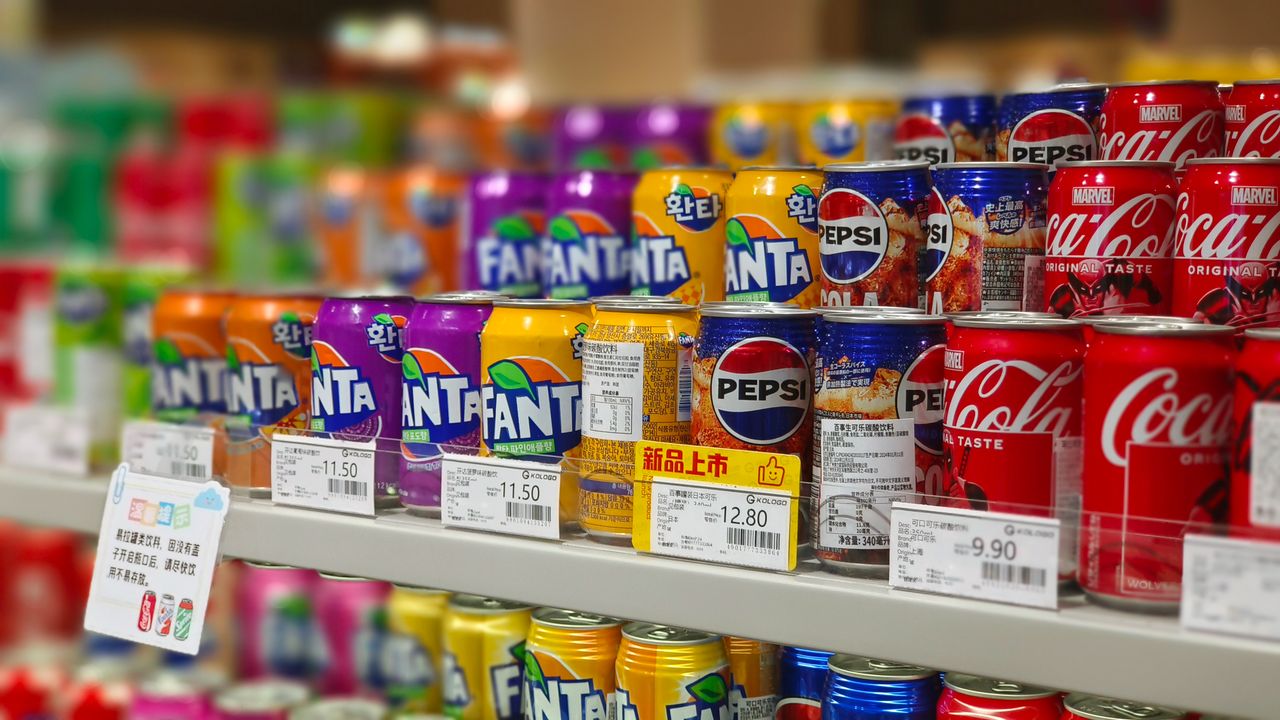
Another Good Reason to Tame Sugary Drink Consumption
Sugary drinks are everywhere.
There doesn’t seem to be any decline in their popularity, either. Yes, there are more low-calorie options than ever, but sales for sugary drinks are on the rise.
The problem is that people who drink sugary beverages every day may have a higher risk of developing gastric cancer, according to a large U.S. study.
Researchers at the Mass General Brigham Cancer Institute found that adults who consumed at least one sugar-sweetened beverage per day had more than twice the risk of gastric cancer compared with people who drank fewer than one per month.
Artificially sweetened drinks were not linked to the same increase.
The findings were published in Gastro Hep Advances.
What Researchers Found
In a study published in Gastro Hep Advances, researchers analyzed data from 112,284 adults in the Nurses’ Health Study and Health Professionals Follow-Up Study, two long-running research projects that have tracked diet, lifestyle, and health for decades.
During follow-up, 278 participants developed gastric cancer.
After researchers adjusted for other known risk factors, they found people who drank at least one sugary beverage per day had a 2.45 times higher risk of gastric cancer than those who rarely drank them.
What’s interesting is the association appeared in both men and women.
For women specifically, drinking more than one sugary beverage per day was linked to roughly 3X the risk compared with women who consumed less than one per month.
Higher overall fructose intake was also associated with more gastric cancer.
Sugary beverages in the study included soda, fruit punch, lemonade, and sports drinks.
That last category may surprise some people. Sports drinks are often marketed around exercise and hydration, but many contain substantial amounts of added sugar.
What about Artificially Sweetened Drinks?
Researchers also looked at low-calorie carbonated beverages containing artificial sweeteners.
After accounting for other factors, these drinks were not associated with a higher rate of gastric cancer.
That does not prove artificially sweetened beverages are harmless or healthier in every situation. It simply means this study did not find the same gastric cancer association seen with sugar-sweetened drinks.
Now keep this in mind: one of the strongest known risk factors for gastric cancer is infection with Helicobacter pylori, usually called H. pylori.
Researchers examined infection status in a much smaller group of 940 participants.
About one-third showed evidence of H. pylori infection.
Sugary beverage intake was not associated with having the infection.
That suggests H. pylori does not easily explain the relationship researchers observed, although the smaller sample means the question is far from settled.
Keep In Mind: The Study Doesn’t Prove This
This doesn’t prove sugary drinks will cause cancer. It was an observational study.
So that means researchers identified patterns, but cannot prove that drinking soda or another sugary beverage directly caused gastric cancer.
People who regularly consume sugary drinks may differ in other ways that affect cancer risk. Researchers adjusted for many of those differences, but no observational study can account for everything.
There were other limitations, too.
Researchers had incomplete information about family history and H. pylori, and most participants were white. Only 278 cases of gastric cancer occurred despite the very large study population.
Those details matter when interpreting a dramatic-sounding result.
Sugary drinks have already been linked in previous research with obesity, type 2 diabetes, cardiovascular problems, and some cancers. This study adds gastric cancer to the list of conditions researchers think deserve closer investigation.
It is not a reason to panic over an occasional soda.
Daily habits are the bigger concern.
For someone drinking soda, punch, lemonade, or sugary sports drinks every day, replacing some of those beverages with water, sparkling water, unsweetened tea, or another lower-sugar option is a fairly straightforward change.
The new study cannot tell people exactly how much that change would lower their cancer risk.
It does give another reason to reconsider whether sugary drinks need to be an everyday part of the diet.