Do You Eat Foods That Fuel Inflammation?
Inflammation gets talked about so much that the word has almost lost its meaning.
Inflammation is often pegged as the “boogeyman,” but it’s not always an enemy. In fact, inflammation exists because it’s one of the body’s basic survival tools.
What really is inflammation, then?
It works quite simply. Imagine you cut your hand, develop an infection, or strain a muscle. As a result, your immune system creates an inflammatory response to contain the problem and start repair.
In that sense, inflammation is great for us.
But the concern with inflammation is when we deal with chronic, low-grade inflammation, which is an immune response that doesn’t completely switch off.
What Does Chronic Inflammation Do to Us?
Chronic inflammation is kind of like leaving the parking brake on in a car.
You need it here and there, but if you drive with it on, you’re really going to mess up the car.
Over time, chronic inflammation is associated with metabolic disease, cardiovascular disease, and a number of other chronic conditions.
And food can cause inflammation.
Studies examining the inflammatory potential of entire diets have also found that people eating more pro-inflammatory dietary patterns tend to have higher cardiovascular risk, although much of this evidence is observational and can’t prove that diet alone caused the disease.
So when I talk about an “anti-inflammatory diet,” I’m not talking about a cleanse, a detox, or a handful of superfoods.
I’m talking about reducing some of the inputs that repeatedly push metabolism and immune signaling in the wrong direction and replacing them with foods that help the body regulate those systems more effectively.
The biggest offenders usually aren’t difficult to identify.
I’ve written about them plenty.
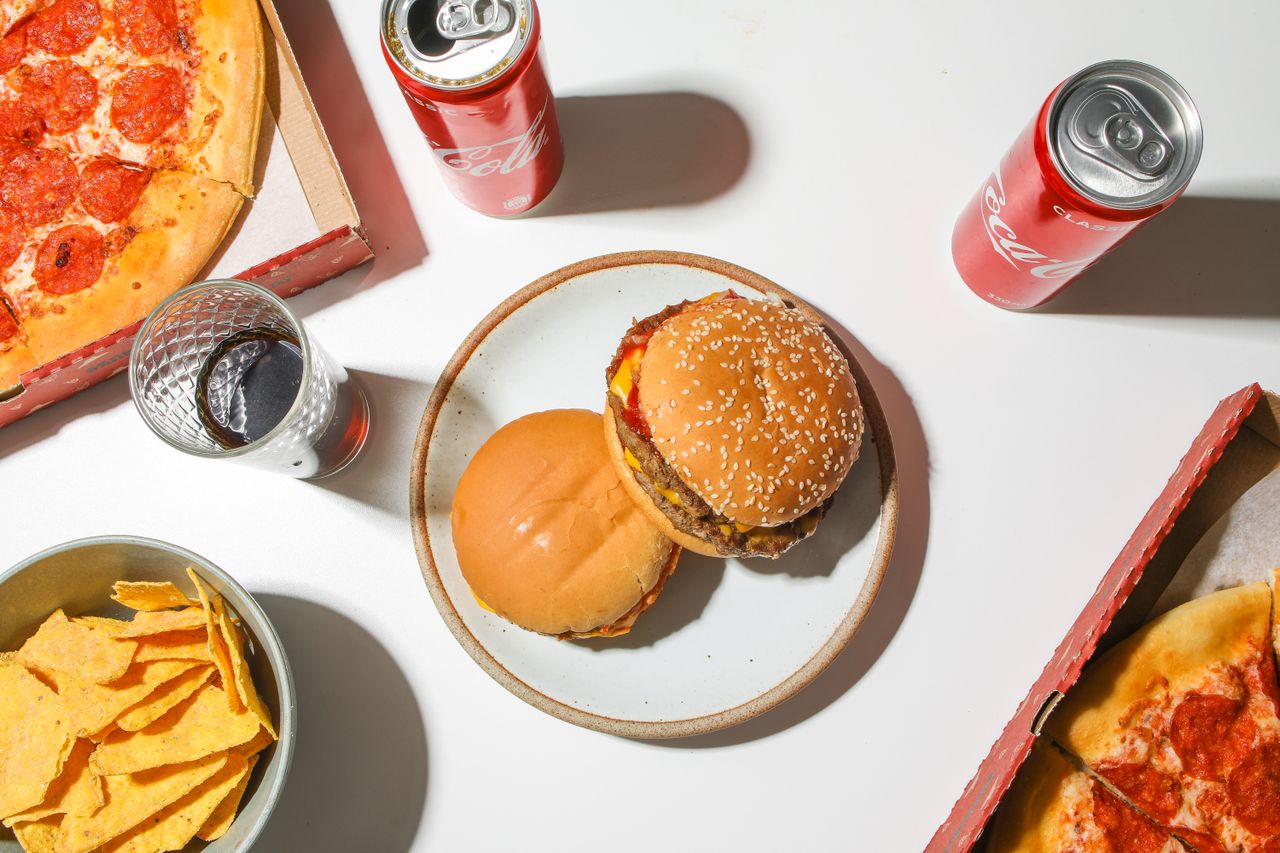
A diet built heavily around ultra-processed foods, fried foods, refined carbohydrates, sugary drinks, and processed meats often comes packaged with several things the body doesn’t handle particularly well in large amounts: rapidly absorbed carbohydrates, added sugars, excessive calories, low fiber, and highly processed fats.
One cookie doesn’t create chronic inflammation.
Neither does a cheeseburger on vacation.
The issue is what happens when these foods become part of your diet.
Sugary drinks are a good example. Liquid sugar reaches the bloodstream quickly and provides very little satiety. Regular overconsumption can contribute to weight gain, impaired insulin sensitivity, and fatty liver, all of which may themselves contribute to inflammatory signaling.
Refined carbohydrates can create a similar problem.
White bread, many breakfast cereals, pastries, crackers, and other heavily refined foods are stripped of much of the fiber and food structure that normally slow digestion. That can lead to bigger swings in glucose and insulin, especially when these foods dominate the diet.
Then there are processed meats and frequently fried foods. I generally think these should be occasional foods rather than everyday staples. Processed meats in particular have consistently been associated with worse long-term health outcomes when intake is high.
The useful question isn’t, “Can I ever eat this?”
It’s, “How much of my diet is being built around it?”
People sometimes become so worried about inflammation that they start eliminating perfectly nutritious foods.
Fruit is a common casualty.
I don’t think most people need to fear blueberries because they contain fructose.
There’s an enormous difference between eating an orange, which comes packaged with fiber, water, vitamins, and plant compounds, and drinking a large soda containing a concentrated amount of added sugar.
Whole fruit, vegetables, beans, nuts and intact whole grains bring something that highly processed foods generally don’t: a complex matrix of fiber and phytochemicals that interacts with the gut microbiome and metabolism.
That distinction matters much more than simply labeling a nutrient such as “carbohydrate” or “fructose” as inflammatory.
I’d Also Be Careful About Demonizing ALL Vegetable Oils
This is one area where internet nutrition discussions often outrun the evidence.
You’ll frequently hear that omega-6 fatty acids automatically create inflammation because they can participate in pathways that produce inflammatory compounds.
Biochemically, there’s a kernel of truth there. And depending on the source of oil and the type, there are issues
Randomized controlled trials examining linoleic acid, the predominant omega-6 fatty acid in many vegetable oils, have generally not shown that increasing linoleic acid meaningfully raises common inflammatory markers in healthy people.
That doesn’t mean I’m recommending unlimited fried restaurant food or gallons of refined seed oil.
I’m much more interested in the overall food.
Extra-virgin olive oil, nuts, seeds, avocado, and fatty fish are excellent sources of fat. If someone is eating enormous amounts of fried and ultra-processed food, I’d change that. But I wouldn’t tell a patient that every drop of canola or sunflower oil is poisoning their inflammatory pathways.
That’s not where the evidence is strongest.
One of the better-studied models is the Mediterranean-style diet.
That doesn’t mean everyone needs to eat exactly like someone living on a Greek island.
It means building meals around vegetables, fruit, legumes, nuts, seeds, minimally processed whole grains, olive oil, herbs and spices, with fish and other high-quality proteins based on preference and tolerance.
A 2026 meta-analysis of 33 randomized controlled trials involving more than 3,400 adults found that Mediterranean dietary interventions reduced several inflammatory biomarkers, including high-sensitivity C-reactive protein and interleukin-6, although not every inflammatory marker improved. That’s an important nuance.
You don’t need a perfect diet; you just need to make more healthy choices than unhealthy ones.
When you do, it can help make your gut healthier, which can lead to lower inflammation.
The bacteria living in our digestive tract interact constantly with food, the intestinal barrier, and the immune system.
While you can’t attribute every disease to an unhealthy gut, your diet can influence immune function through more pathways than calories or blood sugar.
One small but fascinating randomized trial from Stanford compared a diet high in plant fiber with one high in fermented foods. The fermented-food group developed greater microbial diversity along with reductions in several inflammatory markers. The high-fiber group showed more individualized responses, suggesting that microbiome changes may depend partly on where someone starts. That doesn’t mean everyone needs six servings of sauerkraut tomorrow.
It does support something I’ve believed for a long time: dietary diversity matters.
Vegetables, beans, berries, nuts, seeds, whole grains, and fermented foods such as yogurt, kefir, kimchi, or sauerkraut can all have a place, depending on individual tolerance.
If You Eat Well But Do This, It Won’t Help With Inflammation
This is also where an integrative approach becomes important.
A patient can eat salmon, kale, and blueberries every day and still sleep five hours a night, sit for 12 hours, live under constant stress, and wonder why they don’t feel particularly well.
The body doesn’t separate these inputs into neat categories.
Exercise is one of the more reliable non-drug tools we have. A large systematic review of controlled trials found that exercise training was associated with reductions in C-reactive protein, including improvements that occurred even without weight loss.
Sleep matters too. An updated 2026 meta-analysis found that several consecutive nights of partial sleep deprivation were associated with increases in IL-6 and CRP in healthy adults.
One bad night didn’t appear to do the same thing. Again, it’s the pattern that matters.
That’s why I’d rather see someone consistently sleep seven or eight hours, exercise most days, eat mostly whole foods, and enjoy dinner with friends than obsess over whether a teaspoon of a particular oil is inflammatory.
What About Supplements?
Certain supplements may play a role, but I see them as additions to the foundation rather than substitutes for it.
Omega-3 fatty acids are probably the most obvious example. Evidence from multiple meta-analyses suggests EPA and DHA supplementation can reduce some inflammatory biomarkers in certain populations, although results vary substantially by dose, baseline health, and study design.
Curcumin, magnesium and vitamin D are also frequently discussed in this space. They may be appropriate for certain people, particularly when there’s a deficiency or specific clinical reason to use them.
But I wouldn’t start by building a supplement cabinet.
I’d start by building breakfast, lunch and dinner.
The Goal Isn’t an “Anti-Inflammatory” Life
You can’t eliminate inflammation from the human body, and you wouldn’t want to.
The goal is regulation.
That usually means eating fewer foods that repeatedly challenge metabolic health and more foods that provide fiber, micronutrients, healthy fats and plant compounds. It means moving regularly, sleeping well and addressing the medical conditions that may be contributing to inflammation in the first place.
And if inflammatory markers are persistently elevated—or someone has unexplained fatigue, pain, gastrointestinal symptoms or other ongoing problems—the answer shouldn’t simply be “eat more turmeric.”
That deserves a proper medical evaluation.
Food can be a remarkably powerful lever.
But its greatest value isn’t that one ingredient magically turns inflammation off.
It’s that the choices we repeat every day can gradually change the biological environment in which inflammation either keeps getting reinforced—or finally has a chance to settle down.