Weird Way Exercise May Help Ease Pain
It may seem counterintuitive, but when you’re in pain, the last thing you’d think you should do is move more.
Pain makes movement seem like a bad idea. Right?
But getting some exercise could reduce pain and create a positive feedback loop.
Let’s show you how exercise may help improve pain.
Pain Improved When This Happened
Researchers recently conducted an analysis of other studies that suggests exercise may help reduce pain across a wide range of conditions, including osteoarthritis, migraine, inflammatory diseases, neurological disorders and cancer-related pain.
Researchers at Adelaide University reviewed 157 systematic reviews covering 2,736 randomized controlled trials and more than 221,000 participants.
Taken together, the findings make this one of the largest looks yet at exercise as a treatment for pain.
One of the most useful findings was surprisingly simple: people may not need long, hard workouts to benefit.
Even a little movement could help.
In fact, the studies suggested that lower-intensity, shorter exercise programs were associated with greater pain reduction.
Benefits were also seen when people exercised for less than two hours total per week.
On average, exercise reduced pain by about 1.1 points on a 0-to-10 pain scale.
Researchers noted that this was larger than the average pain reduction reported in separate studies of commonly used pain medications.
That does not mean exercise works better than medication. The studies weren’t direct comparisons, and different kinds of pain require different treatments.
Still, the finding is worth noting.
Chronic pain affects roughly one in five adults worldwide, yet exercise is often prescribed with little more guidance than “try to stay active.” For someone already hurting, that is not especially helpful.
So now you’re probably wondering: how does this work, and what should I do to get benefits?
So Why Does Movement Affect Pain?
Exercise appears to influence pain in several ways.
People who exercise frequently often say that physical activity increases the release of chemicals such as endorphins and serotonin. Their release may change how strongly pain is felt and improve pain tolerance.
Movement may also reduce inflammation, improve mood, and change how the nervous system processes pain signals.
That last point matters especially in chronic pain, where the nervous system can become more sensitive over time.
Exercise may help nudge some of those pathways in a healthier direction.
More encouraging, the exercises that produce benefits vary.
You don’t have to be a meathead.
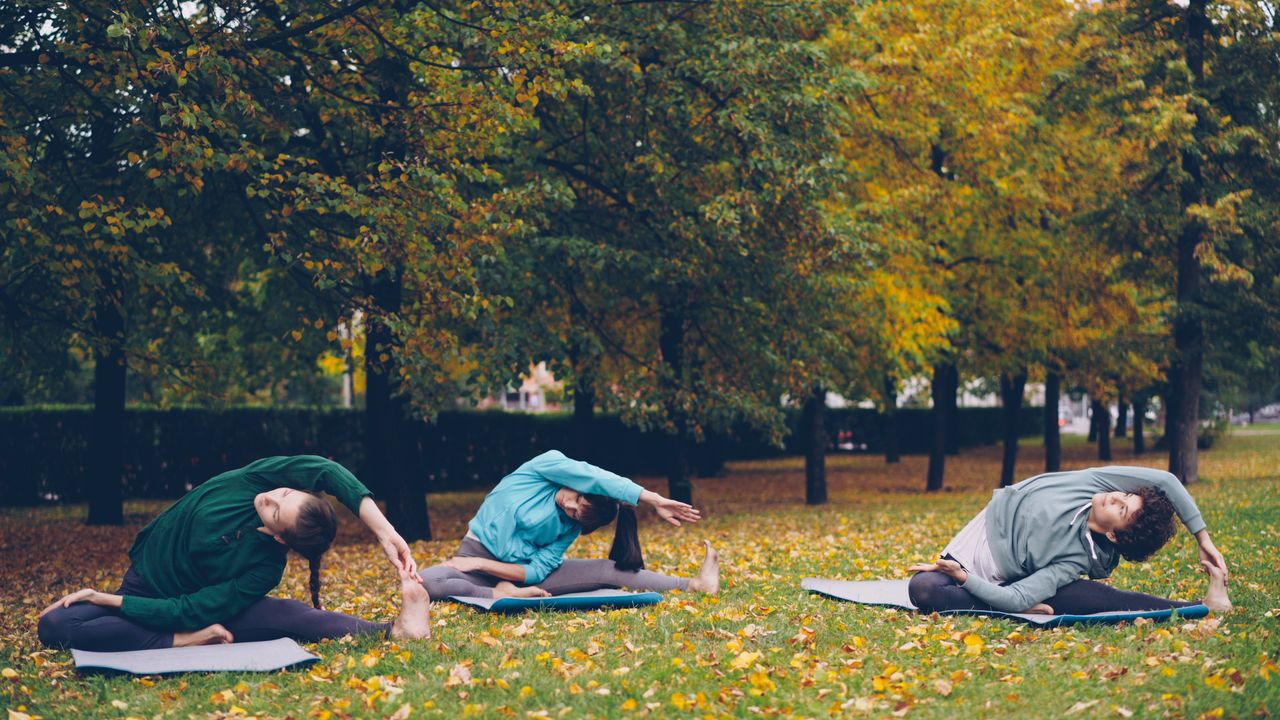
Researchers found pain reductions with aerobic exercise, resistance training, yoga, Pilates, and tai chi. Both acute and chronic pain appeared to improve.
That gives patients and healthcare providers some room to work with.
Someone with joint pain may tolerate gentle resistance training or water exercise better than jogging. Someone with persistent back pain may do better with supervised strength work, Pilates, or another gradual movement program.
Because lower-intensity programs performed well in the analysis, there is less reason to assume that more discomfort means a better workout.
For people with pain, pushing too hard can backfire.
Exercise Should Be Prescribed More Carefully
The researchers argue that exercise should play a bigger role in pain treatment, but with more specific guidance.
Instead of simply telling someone to move more, a useful exercise plan should consider the person’s diagnosis, fitness level, mobility, symptoms, and what activities they can realistically tolerate.
Some people will also need physical therapy, medication, injections, counseling, sleep treatment, or other care alongside exercise.
That is the point of multimodal pain treatment. There is rarely one answer.
The encouraging part of this research is that exercise does not have to be extreme to matter. A modest, well-chosen movement program may be enough to improve pain for some people, and it can also bring other health benefits.
For someone who has avoided activity because of pain, that can make getting started feel a little more realistic.