Beware: These Healthy Milk Alternatives
Plenty of people are trying to avoid dairy.
For some, it’s because of a lactose allergy.
Others are wary of the hormones used on some dairy cows.
Others are trying to be more humane.
Whatever the reason, there has been an explosion of plant-based milks, yogurts, and cheese alternatives in the grocery stores.
Finding a replacement for milk is definitely a challenge – an admirable one – but a challenge nonetheless, and sometimes, nutritionally, they are not always a one-for-one replacement.
Plant-Based Alternatives Are Missing Key Nutrients
A new UK study found that replacing even part of a person’s dairy intake with plant-based alternatives could reduce intake of several important nutrients, especially iodine.
Calcium, vitamin B12 and riboflavin were also affected.
Researchers analyzed dietary data from more than 3,500 people and modeled what would happen if dairy foods such as milk, yogurt and cheese were replaced with commercially available plant-based alternatives.
Among adolescent girls, replacing just 20% to 35% of dairy increased the estimated rate of inadequate iodine intake from 54% to 65%. Among women ages 19 to 49, it rose from 32% to 42%.
When researchers modeled completely replacing dairy, the estimated rate of inadequate iodine intake climbed even higher.
Iodine is needed to make thyroid hormones, which help regulate metabolism and support growth and brain development. Iodine needs also rise during pregnancy.
Equally challenging to pin down is how plant-based alternatives vary tremendously in nutrition.
Some are fortified with calcium, B12, and other nutrients. Others contain very little.
Iodine can be particularly easy to miss.
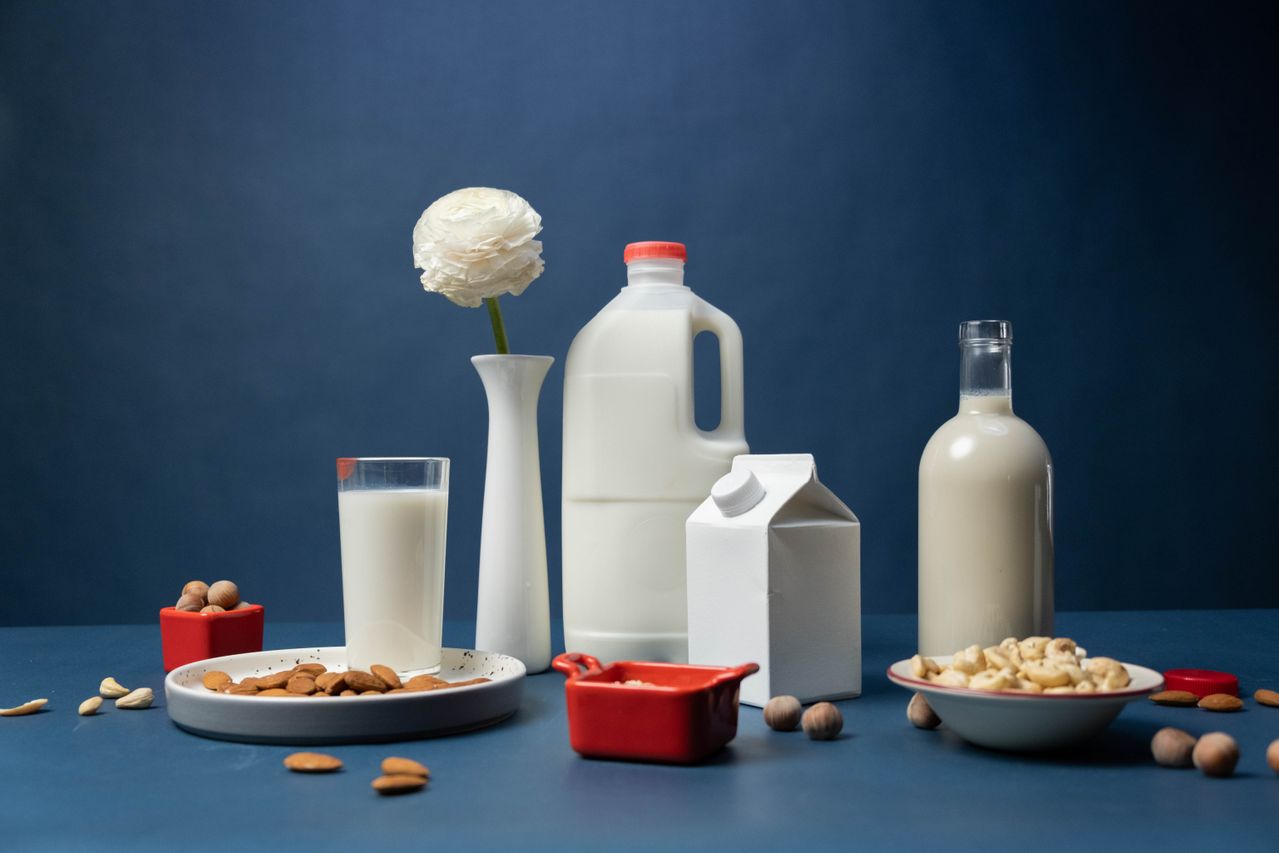
So a carton of oat or almond milk may look like a direct substitute for cow’s milk in the refrigerator, but provide a very different nutrient profile.
The researchers found that fortifying plant-based alternatives could substantially reduce these nutritional gaps. Even then, iodine remained a concern for some groups, suggesting that broader food fortification may sometimes be needed.
What This Means at the Grocery Store
None of this means people need to drink cow’s milk.
It means that removing a major food source of certain nutrients requires a little planning.
People choosing plant-based dairy alternatives should look for products fortified with calcium, vitamin B12 and, when available, iodine. Protein also varies widely between products, with soy-based options generally providing more than many almond, oat or coconut drinks.
Other foods and supplements can fill nutritional gaps when appropriate.
The study was based on UK diets, where dairy is an important source of iodine and food-fortification policies differ from those in other countries. So the exact numbers will not apply everywhere.
The practical message is simpler: “plant-based” does not automatically mean nutritionally equivalent.
When swapping out dairy, check what is actually replacing it.