How to Get “Unsore” FAST
Sore muscles are both a blessing and a curse.
They’re a blessing in that most of the time, sore muscles mean you did something meaningful to earn them. Whether that’s working out, yardwork, or dancing too hard at a wedding…sore muscles are the sign of some sort of work being done.
On that note, that’s how I’m approaching this article…helping you alleviate the pain of sore muscles caused by normal day-to-day activities.
Sore muscles can result from other factors, but I want to focus on how active people can stay active without being limited by them.
Sore muscles are funny, too. Somewhere between the next morning and two days later, your legs feel heavy, your shoulders feel tight, and walking downstairs becomes surprisingly humbling.
In exercise physiology, this is often called delayed-onset muscle soreness, or DOMS.
It tends to happen after unfamiliar or more intense movement, especially eccentric movement, where a muscle lengthens while under load.
Think of lowering a weight slowly, running downhill, doing lunges, or decelerating on a soccer field.
The big thing is DOMS can be a literal pain, and limit future activity…
The good news is that there are integrative ways to care for sore muscles, which I’ll review today.
Did You Know This About Sore Muscles (an Old Myth)
For a long time, people blamed soreness on lactic acid.
And while lactic acid plays a role in sore muscles, it’s not the main culprit.
Lactate builds up quickly during intense exercise but clears relatively quickly afterward.
Muscle soreness is more complex.
Research suggests soreness is less like one simple “pulled muscle” and more like your muscles hosted a surprise home renovation: a few support beams got stressed, the cleanup crew showed up with inflammation, fluids started getting moved around, the electrical wiring got a little touchy, and the alarm system became way too sensitive for a couple of days.
In plain English, the tissue has been challenged, the immune system has been called in for cleanup and repair, and the nervous system is paying attention.
That soreness is often as much a part of adaptation as it is a signal that damage has occurred and repair is taking place.
The problem is that if we do not learn how to work with it, it can become a real barrier to health.
This is definitely something active people deal with, and consistent soreness can impede activity progress.
This can compromise health long-term if a person becomes so discouraged that they stop working out.
Here’s how that could play out.
Imagine a person knows they should be more active, so they restart exercise with good intentions. They do too much too soon, become sore for five days, skip the next workout, lose momentum, and eventually conclude that exercise “just doesn’t work” for their body.
The problem isn’t that their body is broken… it’s that they did more than they could handle and didn’t have adequate recovery inputs in place.
And be honest with yourself here. If you’re always sore, stiff, and run down, don’t you tend to move less?
This subject is personal for me too. Before practicing integrative and functional medicine, I was a highly competitive athlete; in fact, I played soccer at Wake Forest in the early 2000s, and we won a national Championship together.
One thing I learned on and off the field is that soreness is not just something to complain about… but something to attack.
It affected how I sprinted, cut, slept, trained, recovered, and showed up the next day. I also learned that you cannot simply “biohack” your way out of biology. You have to work with it.
That is still how I think about recovery today.
The goal is not to eliminate every bit of soreness. Soreness after a new or intense stimulus can be normal. The goal is to reduce unnecessary soreness and improve tissue resilience, and help people stay consistent with movement over the years, not just days.
Here are the Recovery Strategies I Recommend
One of the most important recovery strategies is also the least glamorous: match the dose of movement to the tissue’s current capacity.
The body adapts beautifully, but it adapts best when the signal is repeated, tolerable, and progressive.
If the signal is too large, recovery takes longer, and soreness becomes a roadblock.
I often compare this to sunlight.
A small amount can help the body adapt. Too much at once burns the skin.
Exercise is similar. The right dose builds capacity. Too much too soon creates unnecessary stress.
This means gradually increasing volume, intensity, speed, and novelty. If you are adding hills, keep the distance modest. If you are starting strength training, begin with fewer sets. If you are returning after time off, remember that your brain may remember your old fitness level, but your connective tissue may not be ready for it yet.
1 – Active Recovery:
When soreness does happen, gentle movement usually beats total stillness.
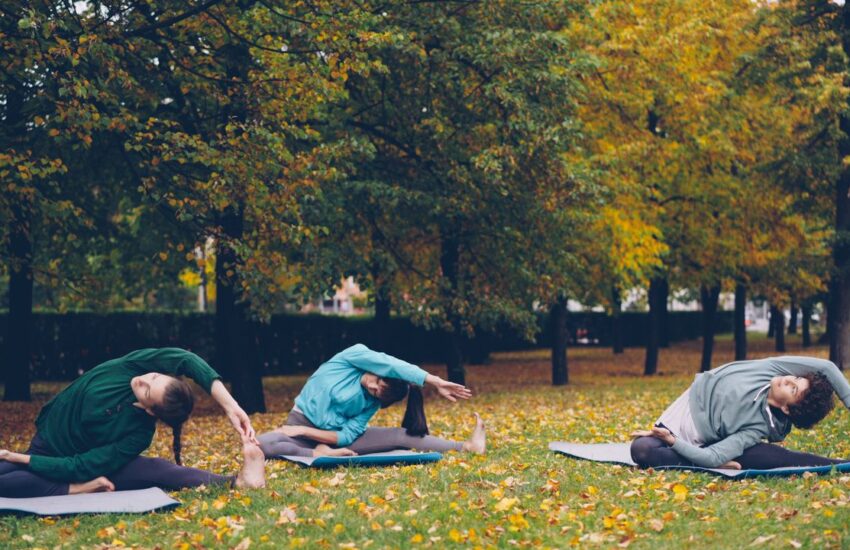
For typical DOMS, light walking, easy cycling, mobility work, or low-intensity movement can help circulation, reduce stiffness, and reassure the nervous system. The recovery movement should feel like you are rinsing out the body, not training hard again.
The research on active recovery is mixed, but systematic reviews suggest it may help some people with soreness and perceived recovery. Clinically, I find it most useful when the person feels better afterward rather than more depleted.
2 – Massage:
Massage is another tool with reasonable evidence, though I think it is often explained poorly.
Massage does not “flush toxins” in the dramatic way it is sometimes marketed. It may reduce perceived soreness, improve local circulation, decrease muscle tension, and shift the nervous system into a more relaxed state.
A 2017 systematic review and meta-analysis found that massage after strenuous exercise was associated with reductions in delayed-onset muscle soreness and improvements in some measures of performance.
3 – Foam Rolling:
Foam rolling is a bit of torture…torture that can work.
This is essentially “self-massage.”
A meta-analysis found that foam rolling may offer small benefits for flexibility and perceived muscle pain. That does not mean it repairs muscle damage overnight, but reducing pain perception and improving range of motion may help people move better the next day.
My advice is to use foam rolling as a conversation with the nervous system, not a fight.
Spend 30 to 90 seconds on a sore area. Breathe. Avoid rolling directly over joints, acute injuries, or areas that create sharp pain, numbness, or tingling.
4 – Heat and Cold:
I’ve written about ice baths and saunas before; exposure to both can be useful, but they do different things.
Cold therapy may reduce soreness after intense exercise in some settings, likely by affecting nerve signaling, blood flow, and inflammatory pathways.
Heat tends to improve blood flow, reduce stiffness, and make movement feel easier.
A network meta-analysis found that both cold and heat therapies may help relieve DOMS pain, while also noting limitations in study quality.
Practically, I individualize this. If someone feels acutely irritated, swollen, or inflamed after a hard effort, cold may help calm the system.
If someone feels stiff and guarded, heat may be better.
One important nuance: frequent, aggressive cold exposure immediately after strength training may not be ideal for everyone, especially if the primary goal is muscle growth and adaptation. Inflammation is not always the enemy. It is part of the signal that tells the body to rebuild.
5 – Stretching:
Stretching is useful, but probably not for the reason most people think.
It can improve mobility, reduce guarding, and help someone reconnect with their body.
But evidence does not strongly support stretching as a major strategy for preventing or reducing DOMS. A Cochrane review found that stretching before or after exercise produced, at best, very small reductions in soreness.
That does not mean stretching is useless. It means we should not oversell it. Gentle mobility can be helpful. Aggressive stretching over already sore tissue may irritate some people.
6 – Nutrition:
Nutrition is another foundational piece. Protein is not a cure for soreness, but muscle repair requires amino acids. A systematic review and meta-analysis found that protein supplementation may support recovery of muscle function after resistance exercise-induced muscle damage, though effects on soreness itself are less consistent.
Clinically, I want patients to build protein into real meals first: eggs, fish, poultry, meat when appropriate, Greek yogurt, legumes, tofu, tempeh, or high-quality protein powders when food is not practical. The right amount depends on body size, age, kidney function, training load, and goals.
Food-based and supplemental support may also help, but claims should remain grounded in reality.
Curcumin, tart cherry, creatine, omega-3 fatty acids, and branched-chain amino acids have all been studied for recovery. Some evidence is promising, but results vary by dose, timing, training status, baseline nutrition, and study design.
These tools can help support recovery in the right person, but they do not replace sleep, protein, hydration, progressive training, or medical care.
7 – Hydration:
If you’re underhydrated, it can really affect how sore you are. Hydration and minerals matter too. Fluid status affects blood volume, temperature regulation, nutrient transport, and perceived effort. Human studies suggest dehydration during eccentric exercise can worsen symptoms and markers related to muscle damage.
8 – Magnesium:
One of my favorite supplements also deserves attention for reducing soreness.
It is not a magic soreness cure, but as a mineral involved in energy production, muscle and nerve function, glucose regulation, and protein synthesis.
For most people, I start with mineral-rich foods: leafy greens, pumpkin seeds, chia seeds, almonds, lentils, black beans, and whole grains. Supplements can be useful, but they should be individualized, especially for people taking medications or managing kidney disease.
9 – Sleep:
Sleep may be the most underrated recovery tool of all. Seriously.
Training is the stimulus, but sleep is when repair is negotiated.
Sleep affects immune regulation, pain sensitivity, glucose metabolism, cortisol rhythm, and tissue repair. Research suggests sleep deprivation can alter inflammatory and hormonal responses after exercise-induced muscle damage and may increase pain sensitivity after muscle injury.
Remember This about Being Sore
Most post-exercise soreness improves within a few days.
But severe worsening pain, significant swelling, dark cola-colored urine, fever, profound weakness, numbness, inability to bear weight, chest pain, shortness of breath, or pain after trauma should be medically evaluated.
My practical recovery philosophy is simple: do not override the body; cooperate with it.
-
Train progressively.
-
Move gently when sore.
-
Eat enough protein. Hydrate.
-
Replenish minerals.
-
Sleep like it matters.
-
Use heat, cold, massage, and foam rolling as tools, not punishment.
-
Consider supplements
As an athlete, I wanted to get past soreness quickly so I could perform. As a physician, I still care about helping people recover quickly, but I care even more about helping them recover wisely.
Because the real goal is not just to feel less sore tomorrow…it’s about still moving next week, next month, and next year.